
| 일 | 월 | 화 | 수 | 목 | 금 | 토 |
|---|---|---|---|---|---|---|
| 1 | ||||||
| 2 | 3 | 4 | 5 | 6 | 7 | 8 |
| 9 | 10 | 11 | 12 | 13 | 14 | 15 |
| 16 | 17 | 18 | 19 | 20 | 21 | 22 |
| 23 | 24 | 25 | 26 | 27 | 28 | 29 |
| 30 | 31 |
- #스마트팜살균시스템#플라즈마농업#플라즈마#분무기#포그시스템#연막기#연무기#악취제거플라즈마#냄새제거 플라즈마#시설하우스개폐기#돌돌이#레일운반카#오존발생기
- #플라즈마표면처리#플라즈마업체#플라즈마장치
- #농업기술#농작물 재배력#농업#스마트팜#플라즈마농업#비료#영양제#작물영양제#식물활성제#보리재배력
- 농업학습#농사연구소
- 고냉지채소#고냉지배추
- #플라즈마장치 #플라즈마표면처리
- 플라즈마표면처리#전선플라즈마표면처리
- 플라즈마장치
- #스마트팜#플라즈마스마트팜#양액플라즈마#플라즈마활성수#플라즈마살균#수경재배#식물공장#수직재배#플라즈마살균#플라즈마기술#플라즈마활성수
- 악취제거플라즈마
- #플라즈마 표면처리 #플라즈마표면개질#플라즈마장치#프라즈마회사 #플라즈마업체#플라즈마표면개질#프라즈마 발생장치#프라즈마살균#프라즈마장치 수리#프라즈마장비#프라즈마실험장치#프
- 플라즈마활성수#플라즈마살균수
- #플라즈마 살균 #농산물 플라즈마처리#식자재 플라즈마살균#축산물 플라즈마처리#음식물 플라즈마처리#저장창고 플라즈마처리#플라즈마멸균#바이오 플라즈마처리#의료용 플라즈마 살균장치
- #대기압플라즈마#플라스마#플라즈마코팅#플라즈마발생기#프라즈마#플라즈마장비#진공플라즈마#화염플라즈마#PLASMA #상압플라즈마#플라즈마클리너#광플라즈마#플라즈마세정#저온플라즈마#AP플
- 식물#공장#식물어원
- #플라즈마표면처리#플라즈마표면개질#플라즈마장치#플라즈마장비#대기압플라즈마#플라즈마업체#코로나처리#플라즈마장비제작업체#플라즈마#상압플라즈마 #플라즈마살균#플라즈마수리#외국
- #플라즈마표면처리#플라즈마기술#대기압플라즈마#플라즈마장치#플라즈마장치#플라즈마업체#상압플라즈마#코로나처리기#플라즈마처리 #플라즈마처리장치#오존발생기#수처리플라즈마#플라즈
- #스마트팜#플라즈마스마트팜#양액플라즈마#플라즈마활성수#플라즈마살균#수경재배#식물공장#수직재배#아쿠아포닉스 https:///www.plasmakorea.com
- #플라즈마 실험장치 #플라즈마실험장치 #실험용플라즈마장치 #플라즈마표면처리장치
- #스마트팜 #물관리 #농업기술 #점적관수 #미래농업 #애그리테크 #지속가능한농업
- #plasma surface treatment #plasma technology #atmospheric pressure plasma #plasma deviceatmospheric pressure plasma #corona treatment device #plasma treatment #plasma treatment device #ozone generator #water treatment plasma #plasma power supply https://p
- 양액통#양액혼합비율
- 쿨란트시스템
- Digtal Transfomation #AI 시대 #감성
- #과수생애주기#농작물 과수
- 플라즈마살균수
- #플라즈마표면처리#플라즈마기술#대기압플라즈마#플라즈마장치#플라즈마장치#플라즈마업체#상압플라즈마#코로나처리기#플라즈마#플라즈마합지기#플라즈마전문회사
- 물살균#살균수#플라즈마활성수
- #플라즈마표면처리#플라즈마기술#대기압플라즈마#플라즈마장치#플라즈마장치#플라즈마업체#상압플라즈마#코로나처리기 #플라즈마처리장치 www.plasmakorea.com
- #플라즈마장치#플라즈마기술#플라즈마표면처리장치#플라즈마개질#플라즈마회사#플라스마#plasma#코로나처리
- Today
- Total
철학하는 농업컨설턴트
plasma surface treatment technology 본문
plasma surface treatment technology, structured as you requested
Plasma Surface Treatment Technology
1. Application Fields
Plasma surface treatment is widely applied in various industries where surface modification is essential. Major application areas include:
- Automotive Manufacturing: Enhancing adhesion before painting, sealing, or bonding plastic and metal components.
- Electronics & Semiconductor Industry: Cleaning and activating surfaces for microchip packaging and printed circuit board (PCB) fabrication.
- Medical and Pharmaceutical Equipment: Sterilizing and improving wettability on medical plastics, syringes, pipettes, and catheters.
- Packaging & Printing Industry: Increasing ink adhesion and coating quality on films such as PET, PP, and PE.
- Textile Industry: Improving dyeability and coating performance of synthetic fibers like polyester and nylon.
- Environmental & Energy Sector: Improving catalytic surface reactivity and filtration efficiency of air or water purification systems.
2. Effects of Plasma Treatment
The plasma surface treatment process modifies only the outermost molecular layers of a material without altering its bulk properties. Key effects include:
- Surface Activation: Plasma introduces functional groups (–OH, –COOH, etc.) on polymer surfaces, improving adhesion to coatings, adhesives, or inks.
- Cleaning & Decontamination: Organic contaminants, oil residues, and dust are removed through ion bombardment and oxidative decomposition.
- Wettability Improvement: Hydrophobic surfaces become hydrophilic, allowing liquids or coatings to spread evenly.
- Etching & Roughening: Plasma can microscopically roughen the surface, increasing surface area and enhancing bonding strength.
- Sterilization Effect: Reactive oxygen and nitrogen species (ROS/RNS) generated in plasma effectively destroy bacteria, viruses, and spores.
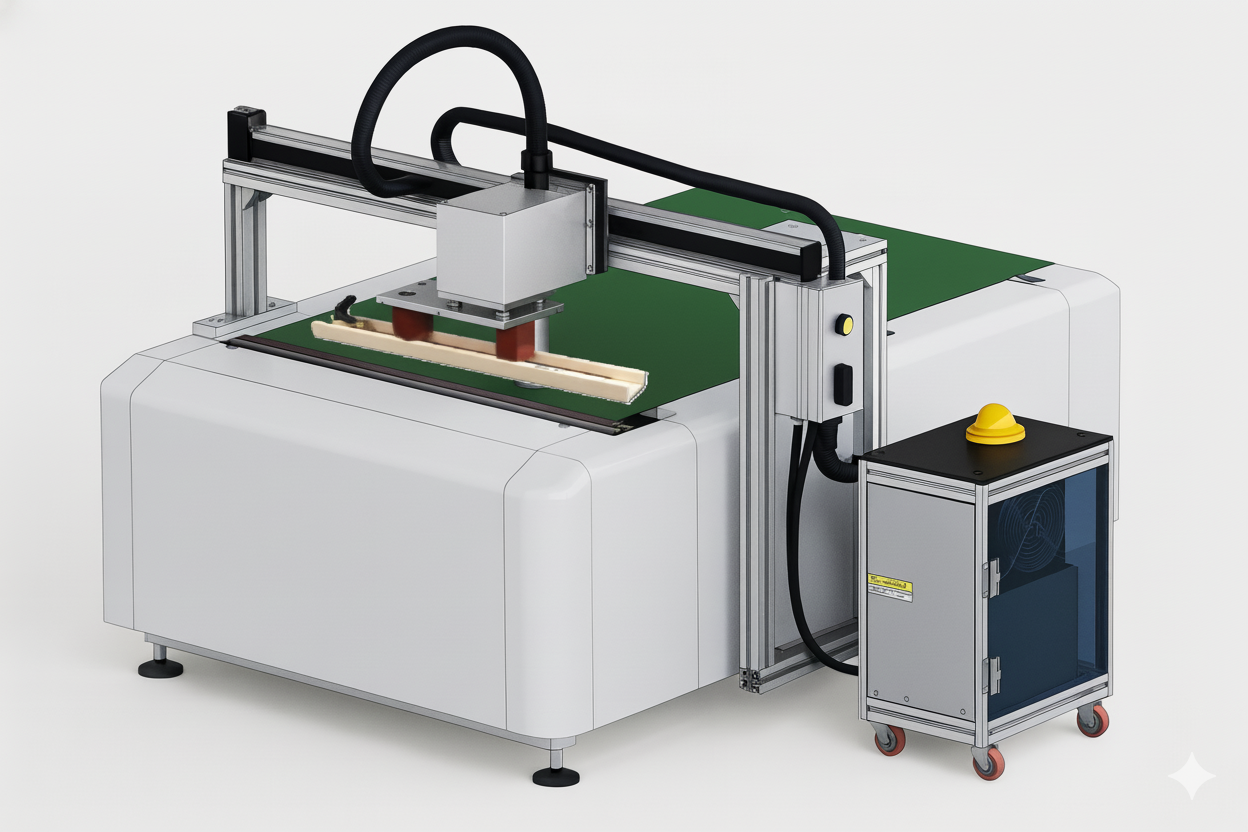
3. Structure of Plasma Surface Treatment Devices
A standard plasma surface treatment system consists of the following components:
- Power Supply Unit:
Converts standard AC voltage to high-frequency or pulsed high-voltage output (typically 10–30 kV at 20–40 kHz) required to generate plasma. Types include DC, AC, RF, MF, and pulsed power supplies. - Electrode Assembly:
- Gas Flow System:
Supplies compressed air, nitrogen, oxygen, or argon through the discharge zone to stabilize plasma and control reaction chemistry. - Treatment Chamber or Nozzle:
Directs the plasma jet or glow region toward the material surface. In continuous systems, this section is integrated into automated production lines. - Control System:
Monitors voltage, current, gas flow rate, and treatment duration, ensuring consistent plasma density and process reliability.
4. Summary of Advantages
| Feature | Description |
| Non-contact process | Works without mechanical abrasion or liquid chemicals. |
| Eco-friendly | Eliminates solvent use and chemical waste. |
| Automation compatibility | Easily integrated into conveyor or robotic systems for continuous production. |
| Improved bonding and coating | Enables strong, uniform adhesion even on difficult polymers. |
5. Conclusion
Plasma surface treatment is a core technology in modern manufacturing that enhances material performance through clean, controllable, and environmentally sustainable processes. Its ability to activate, clean, and sterilize surfaces simultaneously makes it indispensable in industries ranging from electronics and automotive to medicine and packaging.
(참조: 플라즈마뉴스)
'Plasma Product' 카테고리의 다른 글
| Technical Report on Burr Removal Using Plasma Equipment (0) | 2025.11.13 |
|---|---|
| Atmospheric pressure plasma for experiments (0) | 2025.11.08 |
| The Application of Plasma Sterilization Technology (0) | 2025.09.28 |
| Report on the Application of Plasma Sterilization Technology for Air Conditioner Cleaning and Maintenance (0) | 2025.09.28 |
| Plasma Technology Applications in the Beverage Industry (0) | 2025.09.28 |

